AMD vs Nvidia 2026: The GPU Battle Heats Up
The graphics processing unit (GPU) market in 2026 is shaping up to be one of the most competitive years yet. AMD and Nvidia, the two dominant players, are pushing technological boundaries at unprecedented speeds. As artificial intelligence, gaming, and data center computing demand explosive growth, both companies are investing heavily in next-generation architectures that promise revolutionary performance improvements.
The Current Landscape
Nvidia has maintained its market dominance for years, particularly in the data center and AI sectors where their CUDA ecosystem remains unmatched. However, AMD has been steadily gaining ground with aggressive pricing strategies and improving software support. By 2026, the competitive landscape will likely be more balanced than ever before.

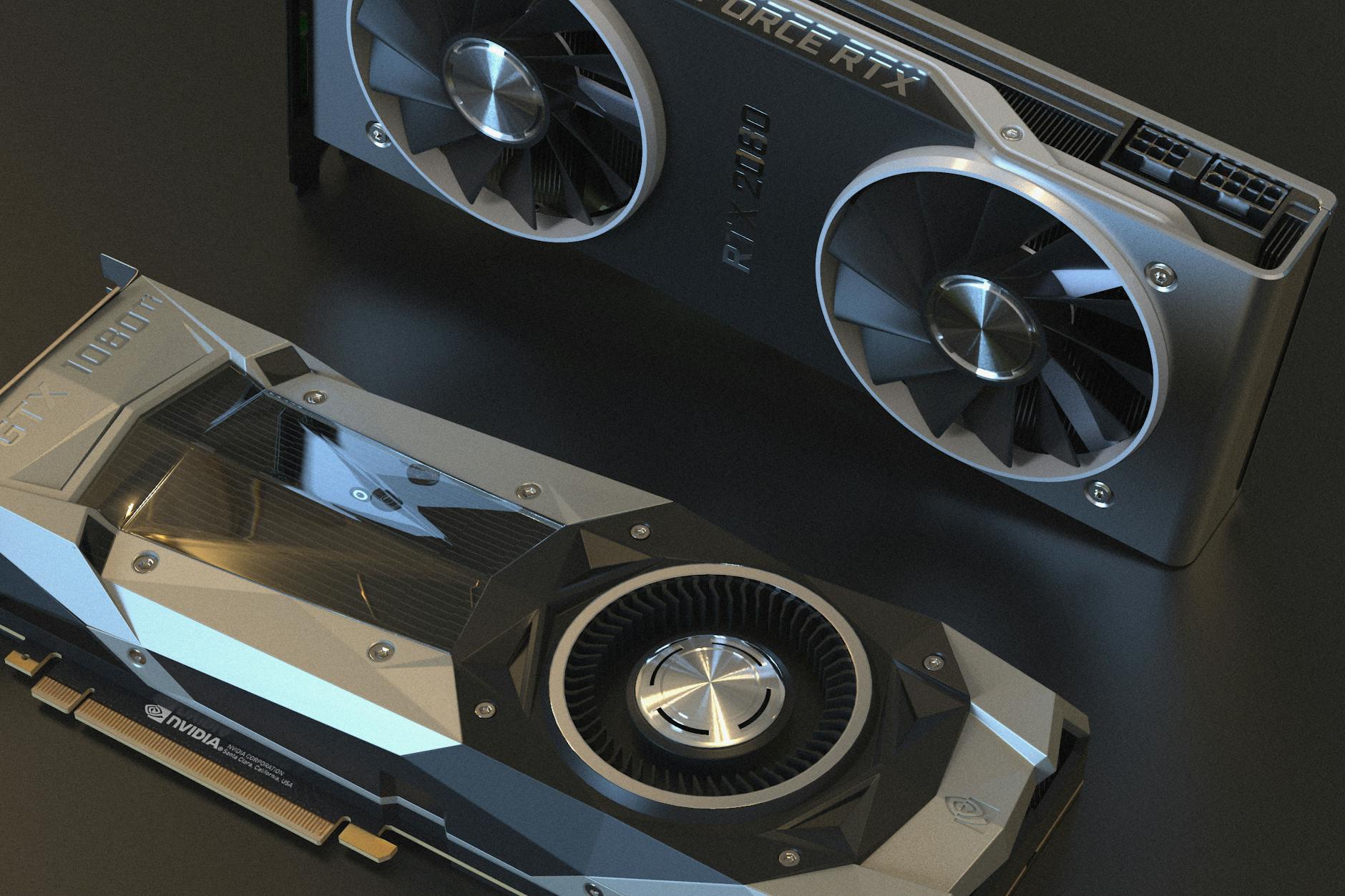
Nvidia’s RTX 50 series and their upcoming enterprise solutions are expected to set new industry standards. Meanwhile, AMD’s RDNA 4 architecture and beyond promises to deliver exceptional performance-per-watt efficiency. The battle for supremacy isn’t just about raw power anymore—it’s about efficiency, software ecosystem, and total cost of ownership.
Gaming Performance and Consumer GPUs
For gamers, 2026 will be an exciting year. Both companies are engineering GPUs with massive VRAM pools and advanced ray-tracing capabilities. Nvidia’s DLSS technology has become industry-standard, but AMD’s FSR (FidelityFX Super Resolution) is closing the gap with impressive quality at lower computational costs.
AMD’s advantage lies in their aggressive pricing model and growing driver maturity. Their RDNA architecture has proven surprisingly capable, offering 70-80% of Nvidia’s performance at significantly lower price points. For budget and mid-range gamers, AMD continues to represent exceptional value. Nvidia, however, maintains premium positioning with superior optimization from major game studios and consistently higher frame rates in demanding titles.
By 2026, we expect the performance gap to narrow further, with AMD potentially offering compelling alternatives in every price segment. The consumer market will likely see AMD capture additional market share, though Nvidia’s premium positioning should remain secure.
AI and Data Center Dominance
This is where Nvidia’s fortress stands strongest. Their CUDA ecosystem, tensor cores, and software libraries have become integral to AI development worldwide. The 2026 outlook shows Nvidia further cementing this advantage with next-generation architectures optimized for transformer models and large language models.
However, AMD isn’t sitting idle. Their MI series accelerators and ROCm software platform are attracting attention from cloud providers and enterprises seeking vendor diversity. Google’s custom TPUs and AMD’s competitive pricing are forcing Nvidia to justify premium positioning through superior performance and ecosystem advantages.
For data centers, the 2026 decision will increasingly depend on specific workload requirements. While Nvidia maintains significant advantages in AI training, AMD’s improved software support and cost-effectiveness make them viable for specific use cases and price-sensitive deployments.
Software Ecosystem and Developer Support
The software landscape profoundly influences GPU purchasing decisions. Nvidia’s CUDA has a decade-plus head start with countless libraries, frameworks, and tools optimized specifically for their hardware. This advantage translates directly to faster development cycles and proven reliability.

AMD’s ROCm platform continues improving, but it remains behind CUDA in maturity and developer adoption. However, the trend is positive. HIP (Heterogeneous-compute Interface for Portability) allows developers to write code once and compile for both AMD and Nvidia hardware, reducing vendor lock-in concerns.
By 2026, expect greater standardization around open-source frameworks like PyTorch and TensorFlow, which support both platforms equally. This democratization benefits AMD by reducing Nvidia’s software advantage while allowing both companies to compete more directly on hardware merit.
Market Share Predictions for 2026
Industry analysts predict AMD will capture increased market share in all segments by 2026. In consumer gaming, AMD could reach 25-30% market share. In data centers, AMD’s share might climb to 15-20%, up from current levels. However, Nvidia is expected to maintain overall dominance with 70-75% data center market share and strong positions across all segments.
This isn’t necessarily loss for Nvidia—the GPU market is expanding rapidly due to AI demand. Growing market size means both companies can win even if market share shifts.
The Verdict
AMD vs Nvidia in 2026 won’t have a clear winner—it depends entirely on use case. For AI researchers and data center operators prioritizing ecosystem maturity, Nvidia remains the safe choice. For gamers and budget-conscious buyers, AMD offers exceptional value. For enterprises seeking vendor flexibility and competitive pricing, AMD’s improving ecosystem makes them increasingly attractive.
The real winner in 2026 will be consumers and businesses, who benefit from genuine competition driving innovation and competitive pricing. Both companies will push technological boundaries, ultimately accelerating the AI revolution and next-generation computing.
The GPU race continues heating up.